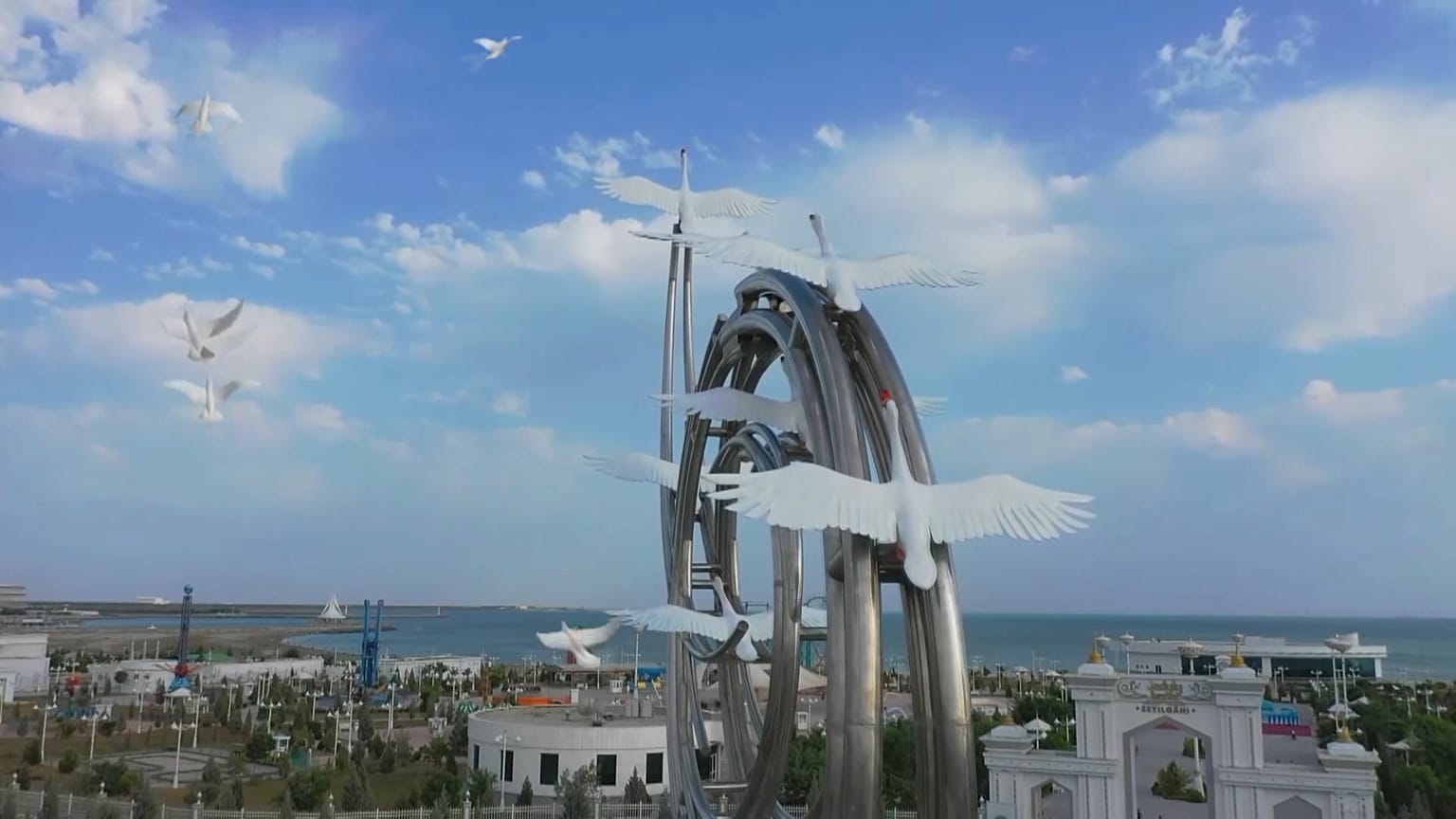














When the United Nations General Assembly unanimously recognised Turkmenistan’s status of permanent neutrality in December 1995, few could have predicted quite how central this principle would become to the country’s identity. Thirty years on, Turkmenistan is celebrating a political approach that has not only shaped its foreign policy but also influenced its role in a region often marked by shifting alliances and historic tensions.
 ADVERTISEMENT
ADVERTISEMENT
ADVERTISEMENT
For Turkmenistan, neutrality was never simply a legal label. It became a cornerstone of its statehood — a promise to stay clear of military blocs, to avoid interference in the internal affairs of others, and to champion diplomacy over confrontation. In the years since, the government has worked to present neutrality as both a stabilising force and a platform for cooperation, arguing that the country’s independence from geopolitical rivalries allows it to broker dialogue rather than division.
A Policy with Deep Roots
The decision to adopt permanent neutrality was formalised not just internationally but also at home. Turkmenistan enshrined the principle in national law, elevating it to a guiding philosophy for its political, economic and social development. In the decades since, this stance has been repeatedly reaffirmed, including in the most recent UN General Assembly resolution adopted by consensus in March 2025.
Supporters of Turkmenistan’s approach often point to early diplomatic efforts — such as hosting UN-brokered peace talks during the Tajik civil war — as signs that neutrality was intended to be active, not passive. The establishment of the UN Regional Centre for Preventive Diplomacy in Ashgabat further cemented the country’s image as a venue for dialogue in Central Asia.
Neutrality in Action: Building Links, Not Lines
While neutrality can seem like an abstract concept, Turkmenistan has worked to give it an economic and practical dimension. Over the past three decades, the country has increasingly styled itself as a bridge, whether it’s between Asia and Europe, between producer states and consumer markets or between regions grappling with shared environmental challenges.
Transport corridors crossing Turkmenistan have expanded steadily, from rail links to port developments on the Caspian Sea. New logistics hubs are reshaping the movement of goods between Central Asia, the South Caucasus and the Middle East. Energy projects — particularly in natural gas — have also been framed as part of this connectivity, with Turkmenistan positioning itself as a reliable partner welcoming cooperation on equal terms.
This approach is visible in areas beyond infrastructure. Ecological concerns, particularly water security in a region increasingly vulnerable to climate stress, have become a focus for diplomatic engagement. Turkmenistan has hosted environmental conferences and promoted cross-border cooperation, arguing that neutrality helps create a climate of trust needed for tackling sensitive issues.
A Year of Celebration and Reflection
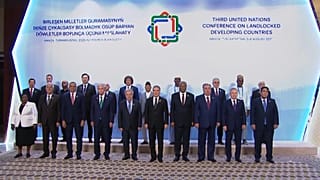
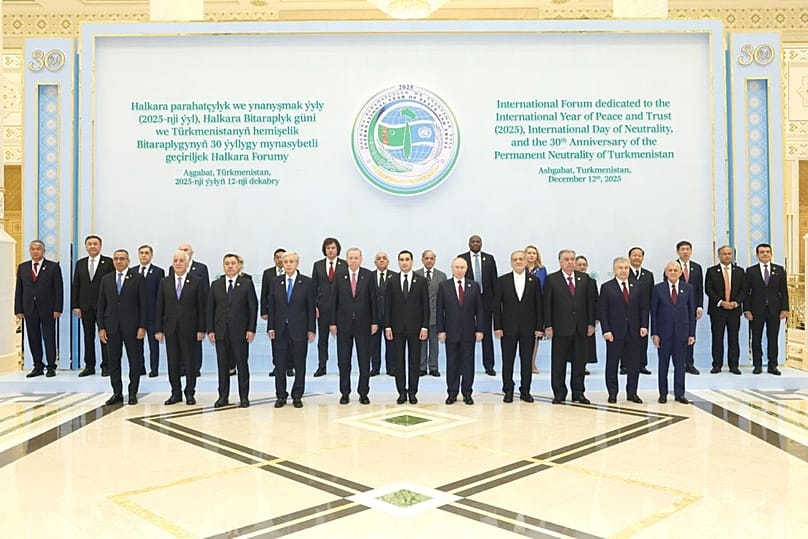
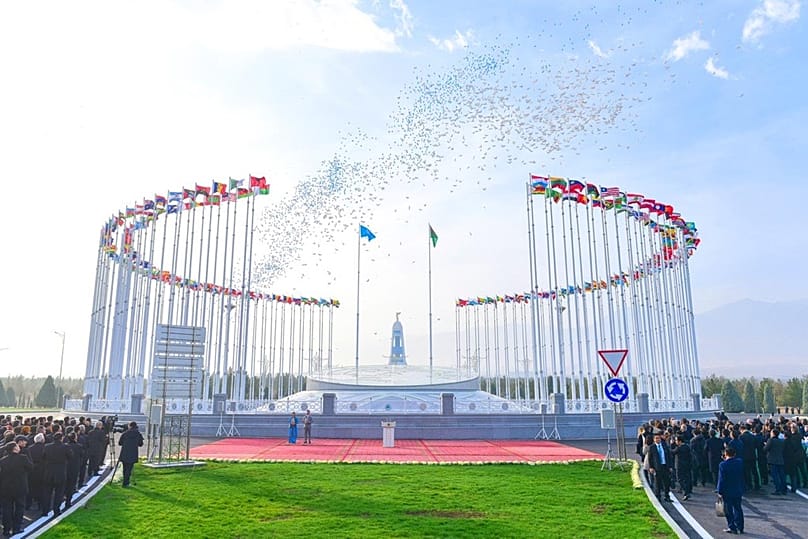
With the 30th anniversary now underway, celebrations stretch far beyond Ashgabat. Cultural exhibitions, academic forums and conferences, as well as diplomatic receptions, have been held in different parts of the world, reflecting broad international interest in Turkmenistan’s neutral stance and its implications for regional and global cooperation.
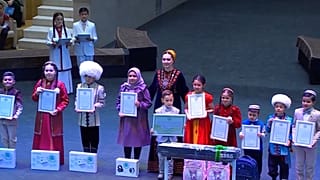
Inside Turkmenistan, the commemorations have taken on a strongly social dimension. Universities and youth organisations have hosted discussions exploring what neutrality means for the country’s future. For many young people, neutrality is not a distant political decision but something woven into their national education and identity — a defining feature of how Turkmenistan presents itself to the world.
The fact that the anniversary coincides with the International Year of Peace and Trust — a UN initiative initially proposed by Turkmenistan — has given additional resonance to the celebrations. Officials have emphasised that the country’s neutrality is not frozen in the past but continues to evolve, adapting to new global challenges and opportunities.
Looking Ahead: Neutrality as a Strategy for the Future
As Turkmenistan marks three decades of its defining foreign-policy doctrine, the question naturally arises: what comes next? The official message from Ashgabat is clear — neutrality remains central to how the country sees itself navigating an increasingly uncertain world.
Government statements this year highlight “new initiatives aimed at strengthening peace, trust and cooperation”. While the details are still emerging, the emphasis appears to be on reinforcing the economic side of neutrality — enhancing transport connectivity, encouraging innovation, and expanding Turkmenistan’s role in regional diplomacy.
In a world divided by geopolitical rivalry and uncertainty, Turkmenistan is keen to present its neutrality not as an absence of alignment but as a model for constructive engagement. Supporters say that, by avoiding entanglement in competing alliances, the country is able to offer a rare space for conversation in a region where tensions can easily flare. Critics, meanwhile, argue that neutrality also requires openness and transparency to remain credible on the global stage.
What is clear is that the anniversary has given Turkmenistan an opportunity to restate its long-standing message: that neutrality, far from being a passive stance, can serve as a framework for partnerships, connectivity and peaceful cooperation.
As the country looks ahead to the next 30 years, it frames neutrality not simply as a decision made in 1995, but as a long-term national commitment — a compass guiding Turkmenistan through the complexities of the modern world.