













As Tajikistan celebrates 35 years of independence, the milestone offers an opportunity to reflect on how far the nation has come while looking towards the years ahead.
 ADVERTISEMENT
ADVERTISEMENT
ADVERTISEMENT
Thirty-five years into independence, with decades of peace and stability established, Tajikistan turns increasingly outward. The country’s international agenda is now focused on tackling some of the defining challenges of the modern world, from peacebuilding and water security to climate change and digitisation.
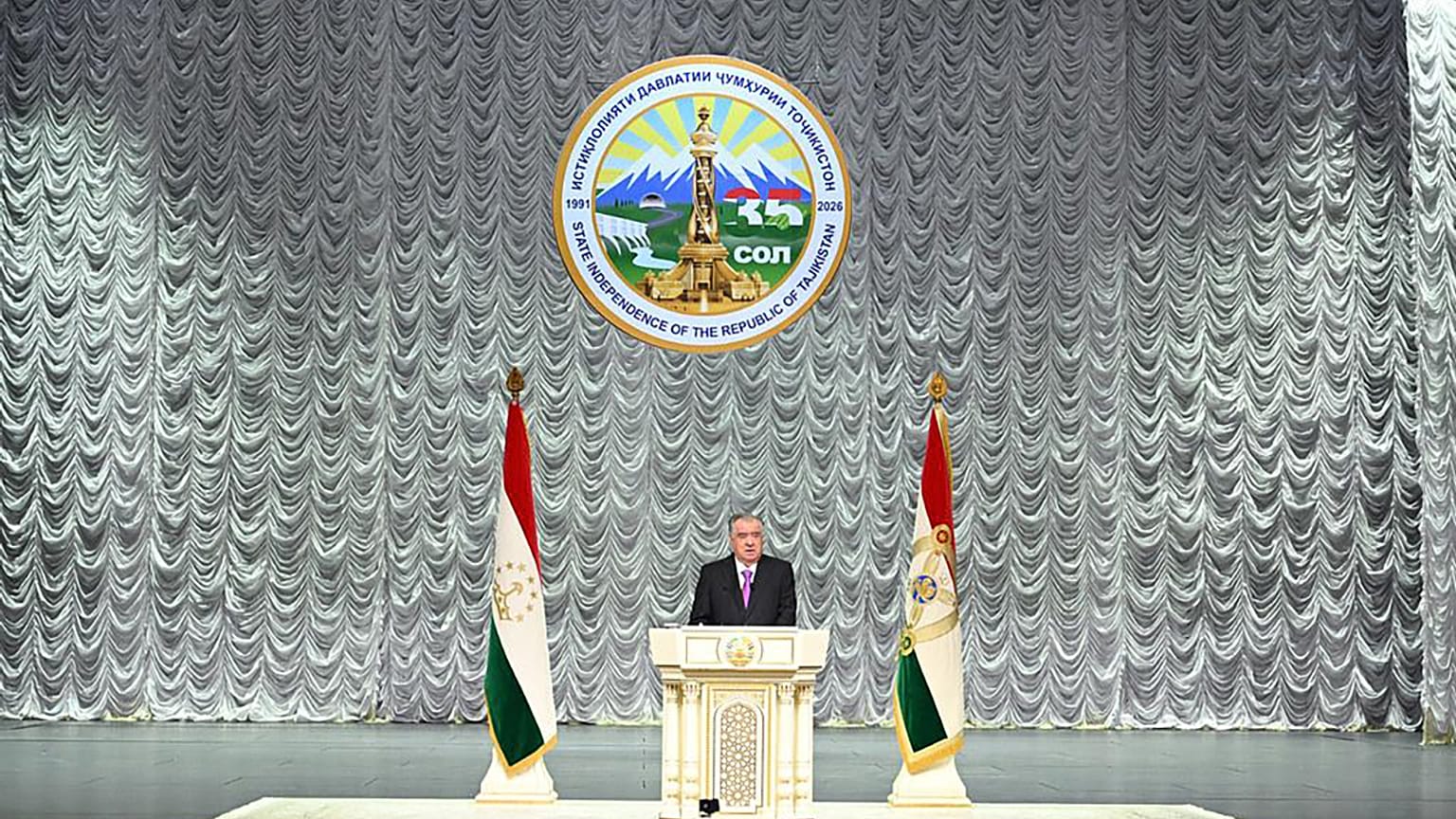
In an anniversary address in Dushanbe on 8 September, President Emomali Rahmon highlighted Tajikistan’s ongoing commitment to promoting global peace, referencing the nation’s role in advancing the UN resolution for a “Decade for Strengthening Peace for Future Generations,” from 2027.
Another proposal by Tajikistan saw the United Nations General Assembly adopt a resolution to establish the International Day of Safe, Secure and Trustworthy Artificial Intelligence, to be observed annually on 31 August.
Taken together, the two initiatives offer a glimpse of how Tajikistan seeks to frame its next 35 years within a global context, looking outwards to address shared challenges of digital transformation and sustainable development for the health and prosperity of future generations.
35 years of independence and peacebuilding
Tajikistan declared independence on 9 September 1991, following the dissolution of the Soviet Union. The early years were marked by civil conflict, with a peace agreement reached in 1997.
President Emomali Rahmon, who has led Tajikistan since the early years of independence, has placed peace, national unity and stability at the centre of the country’s development narrative.
Since gaining independence, the country has rebuilt infrastructure, expanded energy and transport networks, and developed education and social services, while strengthening connections with neighbouring countries and the wider world.
To celebrate the milestone, anniversary events are taking place across Tajikistan, including cultural performances in Bokhtar and a military parade in the capital of Dushanbe. In his address at the National Theatre, President Rahmon spoke about the country’s progress and his vision for Tajiks to be recognised internationally as a forward-looking society.
That ambition is reflected in investments in the skills, digital infrastructure and institutions needed to participate in an increasingly technology-driven global economy.
Water, diplomacy and sustainable growth
Tajikistan’s mountainous landscape offers a huge clue to one of the nation’s defining priorities.
Tajikistan is home to snowfields and glaciers that bring water down from the Pamir and other mountain ranges to feed rivers across the region. It is one of Central Asia’s most important sources of freshwater, with a water security strategy that matters well beyond its borders.
Tajikistan has pushed water security and sustainable management higher on the global agenda, contributing to the establishment of the UN’s Water Action Decade (2018-2028) which has created cross-border projects, promotions and partnerships in efforts to avert a global water crisis.
In line with national energy strategy, Tajikistan seeks to further harness its significant hydropower potential, with large-scale renewable energy projects such as the World Bank-funded Rogun Hydropower Plant playing a central role in its plans to improve domestic energy security and strengthen regional connectivity.
All this spills over into another of Tajikistan’s priorities: technology. In May 2026, Tajikistan and the United Nations convened a ‘Water and AI: A Two-Way Nexus’ forum in Dushanbe, examining how artificial intelligence could support more sustainable water management while considering the water demands of AI itself.
All this illustrates how Tajikistan’s priorities are evolving beyond its own borders, looking to shared technologies and regional cooperation in its strategy to tackle challenges that will shape the coming decades.
Looking beyond 35 years
Tajikistan’s 35th anniversary is both a moment to reflect and to aspire.
The country’s journey since independence has included the difficult work of establishing peace and stability, rebuilding after conflict and developing the foundations of a modern economy.
The next 35 years will bring a different set of challenges – from managing water resources and adapting to climate change to creating economic opportunities while navigating rapid digitisation.
As celebrations take place across the country, Tajikistan is looking towards a future in which it plays a growing role not only in tackling challenges at home, but in bringing them to the international spotlight.