



























The master craftsman of Catalan modernism created the architectural stereotypes that now draw hordes of tourists to Barcelona, which will not see his magnum opus, the Sagrada Família, completed in 2026 as planned.
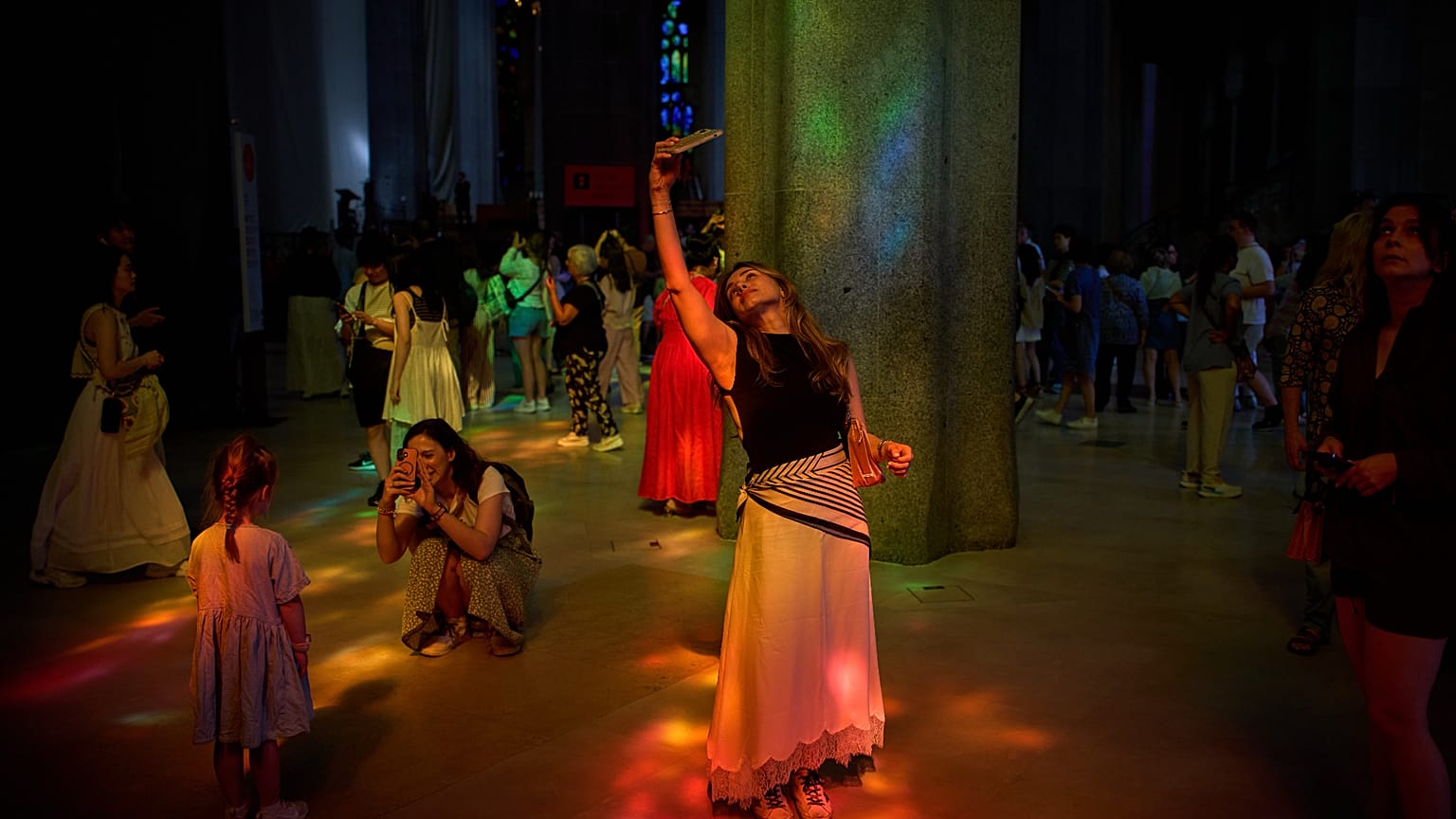
The episode is well known. At around six in the evening on 7 June 1926, Antoni Gaudí i Cornet was on his way to his daily mass in Plaça de Sant Felip Neri, a tucked-away corner in the heart of Barcelona’s Gòtic quarter where the dwindling local community, embodied by the children from a nearby school who play in this makeshift courtyard, puts up resistance to the 26.1 million tourists who visit the city every year, many of them drawn by the legacy of Catalonia’s most iconic architect.
 ADVERTISEMENT
ADVERTISEMENT
ADVERTISEMENT
Contemporary reports describe how, as the Tarragona-born architect was crossing Gran Via between the corners of Carrer de Bailèn and Carrer de Girona, two trams on the line between Plaça de Tetuán and Passeig de Gràcia crossed paths. Gaudí stepped back to avoid one of them but was hit by the second. The spot where the collision took place lies roughly halfway, a 20-minute walk, between two of his most emblematic works: Casa Milà (better known as La Pedrera) and the basilica of the Sagrada Família.
The accident left him with a concussion, several broken ribs and, first, a transfer to a first-aid clinic in Sant Pere Més Alt (because the two passers-by who helped him failed to recognise him) and then to the old Hospital de la Santa Creu, where he died some 48 hours later at the age of 74. He was buried in the Chapel of Our Lady of Mount Carmel, in the crypt of his best-known, still-unfinished work.
Known for his Catholic devotion and claimed as a symbol by the pro-independence right, Jordi Pujol himself (who, like Gaudí, is inseparable from the identity of contemporary Catalonia) went so far as to say in front of Queen Emerita Sofía at a commemorative event in 2002 that Gaudí was not just "a builder of buildings", but also "a shaper of the collective soul of Catalonia", as Catalina Serra reported at the time in her piece for El País.
It is no coincidence that Gaudí’s most prolific period unfolded in parallel with the Renaixença, the cultural movement that led to a boom in Catalan literature, among other art forms, in the late 19th century. It formed part of the Romantic current that swept across the European continent (as in the case of the Galician Rexurdimento) in that century, sowing the seeds of many nationalist movements in the Old World.
The beginnings of the legend: from the Calderera to the Mataronense
Historian Josep Maria Tarragona recounts how the small and sickly Antoni, the youngest child of a modest family of coppersmiths raised, from 1852, between the city of Reus and the village of Riudoms (Tarragona), learned his father’s trade during frequent bouts of rheumatic fever that prevented him from going to school.
Catalonia, the cradle of the Industrial Revolution in Spain, was undergoing profound economic and urban transformation: two years after Gaudí’s birth, Barcelona’s medieval walls were torn down and Ildefons Cerdà’s revolutionary Eixample was implemented, improving public hygiene and reunifying the city within the walls with neighbouring municipalities such as Gràcia. Only four years earlier, in 1848, the state had opened its first railway line between Mataró and Barcelona.
The Gaudí i Cornet clan, Tarragona writes, did not want to miss this train and moved to Barcelona in 1868 to give their sons the chance of a university education, selling off several properties and mortgaging Mas de la Calderera, the farmhouse that several of the architect’s acquaintances insist was his birthplace.
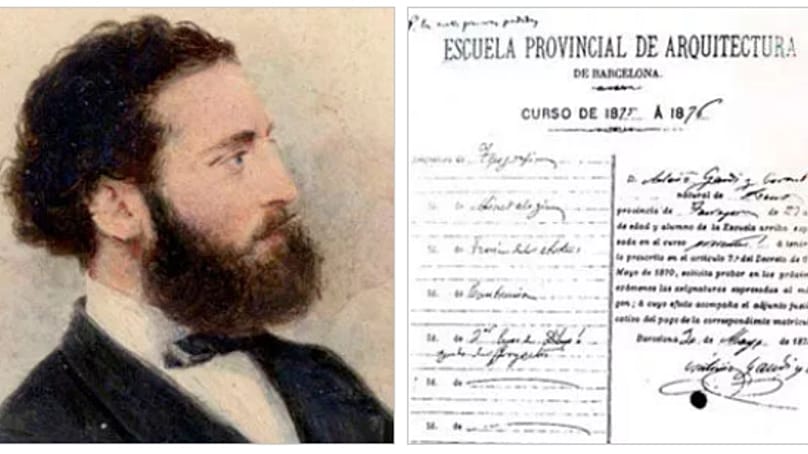
Antoni, however, would not manage to enter the School of Architecture until 1874, because of the prior academic requirements and the family’s limited means. By then he was working as a draughtsman and shortly afterwards began signing his first projects, such as the hydraulic system for the monumental waterfall in the Ciutadella (1875) under the supervision of Josep Fontserè.
This project was created for Barcelona’s 1888 Universal Exposition and is one of the first examples of Catalan Modernisme, the architectural strand of the Renaixença characterised by exuberant, sinuous designs and forms inspired by nature, such as floral motifs. From the outset, then, his stamp would be indelibly linked to Barcelona, as it remains today.
A supporter of the Glorious Revolution that ushered in the Democratic Six-Year Period and of the government of Juan Prim (also from Reus), Gaudí worked between 1878 and 1882 on another project with a marked political slant: the Mataró Workers’ Cooperative.
It was conceived as a social complex made up of the factory itself and facilities for the workers (affordable housing, gardens and a services building) at the height of utopian socialism and of the labour movement’s demands in the late 19th century. Gaudí even fell in love with one of the teachers at the school, Pepeta Moreu, but she rejected him, saying she was already engaged.
With an impressive CV behind him and a capital beginning to treat him as a public figure, the architect and director of the School, Elies Rogent, declared when handing him his diploma in 1879: "I do not know whether we have given the title to a madman or to a genius; time will tell."
Work begins on the Sagrada Família
By now, Gaudí was fully integrated into the bourgeois society of the burgeoning metropolis: he took part in associations linked to the Renaixença such as the Catalanist Association for Scientific Excursions and mixed with contemporaries like the poet and priest Jacint Verdaguer or the industrialist Eusebi Güell, who would become one of his best clients and friends.
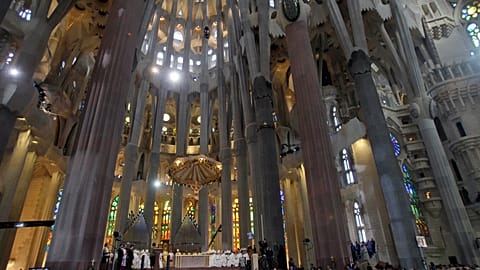
In 1883 he was commissioned to continue work on the project of his life, the Sagrada Família. Gaudí chose to alter the initial design and embark on a gargantuan project centred on the origin of the work, the crypt of the Catholic temple where he would end up buried, which he would never see completed and which, even today, despite progress on the central tower, still needs another decade before it can be finished in accordance with its creator’s wishes.
From that year until 1887 he also focused on developing the Güell pavilions, commissioned by Eusebi. It was here that the architect, who had been experimenting with neo-Mudéjar elements, used for the first time the trencadís technique, one of his most recognisable inventions, consisting of a mosaic cladding made from fragments of ceramic, glass or marble, generally in bright colours.
The design also includes an anecdote linked to the workshop of ceramicist Lluís Bru. In a fit of irritability or ADHD, as he watched his colleague painstakingly laying the pieces one by one, Gaudí grabbed a tile and hurled it to the ground, allegedly exclaiming: "You have to lay them by the handful, or we will never finish!"
That flash of anger is now frozen in time in many of the monuments that bear witness to this period and still stand in his city, but also beyond Barcelona. From this period, for example, comes Villa Quijano ("El Capricho") in the Cantabrian town of Comillas, designated a Site of Cultural Interest.
Maximalism and loss raised to the power of three: the final period
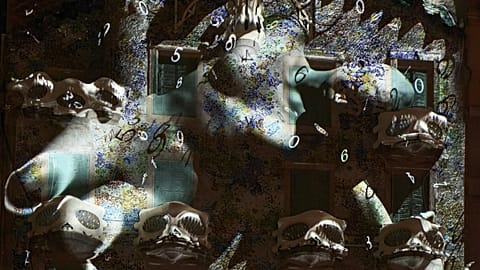
Gaudí would markedly accentuate the contrasts of colour on the façades of his creations, leaving an unmistakable stamp on some of his best-known works, such as Casa Calvet, Park Güell, Casa Batlló or Casa Milà. Nature dictates the shapes through helical forms and leaning columns, and this evolution would ultimately be reflected in the project that obsessed him and concentrated his attention, almost exclusively, from 1915 onwards: the unfinished basilica.
The master suffered several losses (his niece Rosa; Francisco Berenguer, his main collaborator; his friends José Torras y Bages and the very Eusebi Güell) which deepened his religious fervour and his isolation as he strove to complete his life’s project. After the death of another collaborator, the sculptor and modeller Llorenç Matamala, in 1925, Gaudí moved into a small room in his workshop at the Sagrada Família and devoted himself entirely to his work.
Witnesses recall that, on the afternoon of 7 June 1926, Gaudí had been working on some lamps for the crypt and, at the end of the day, before setting off as usual for the church of Sant Felip Neri, he called one of the workers who was assisting him: "Vicente, come early tomorrow, we will be doing very beautiful things". A beauty left unfinished that Leo XIV himself will have the chance to see this Wednesday, 10 June, when he visits the building that is at once the masterpiece, home and tomb of the Catalan master.